When someone doesn’t wake up after a severe brain injury or illness, the uncertainty can be overwhelming. This page explains what a coma actually is, what causes it, how the care team evaluates and cares for it, and what the different stages of recovering consciousness really mean, so you can better understand what is happening and what questions are worth asking.
A term that is used frequently and often loosely.
A coma is a state of profound, sustained unconsciousness. A person in a coma cannot be awakened: their eyes stay closed, they do not follow a normal sleep-wake cycle, and they make no purposeful response to voice, touch, or even a painful stimulus. It is not sleep, and it is not something a person can be startled or shaken out of.
Consciousness has two separate ingredients: arousal (being awake, eyes open, on some level "switched on") and awareness (actually perceiving and processing oneself and one’s surroundings). A coma is the loss of both at once. That combination points doctors toward the two places in the brain that, together, keep a person conscious: the two cerebral hemispheres (which generate awareness) and the ascending reticular activating system, a network running through the brainstem that keeps the rest of the brain switched on. Widespread injury to both hemispheres, or a much smaller injury to this brainstem network specifically, can each cause a coma on their own.
Coma can result from damage confined to the brain itself (a “structural” cause, such as a head injury, stroke, or brain bleed) or from a problem affecting the whole body that in turn affects the brain diffusely (a “metabolic” or toxic cause, such as very low blood sugar or a drug overdose). When a patient arrives already in coma, one of the first tasks of clinicians is telling these apart, because in some cases understanding and treating the root cause can reverse the coma.
Select a cause to learn more. Doctors broadly sort causes into two groups: damage confined to the brain itself, and a problem elsewhere in the body that affects the brain diffusely.
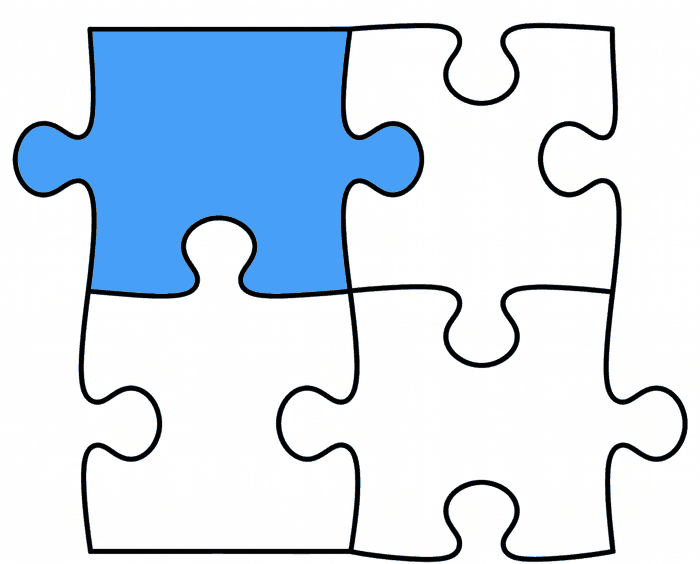
Understanding an individual's unique coma — its causes and its current status — requires piecing together several different clues.
Click a piece to see how it fits into the evaluation.
If a patient survives the initial injury, a coma rarely resolves completely, immediately. It typically evolves through recognizable stages. Understanding how recovery may evolve through these stages is often the most confusing part for families, because these terms sound alike but can mean very different things. Click on each stage to learn more.
Brain Death and Locked-In Syndrome are very different from coma and from each other, representing opposite extremes in levels of consciousness beyond coma.
Brain death is the complete, irreversible loss of all brain and brainstem function, including the ability to breathe without a ventilator. It is legally and medically equivalent to death, even though a ventilator and medications can keep the heart beating. It is confirmed through a specific, structured protocol, including an apnea test and sometimes an additional imaging/blood-flow study, performed and documented separately from any routine coma exam.
Locked-in syndrome is nearly the opposite of coma: full, preserved awareness and thought, trapped inside a body that cannot move or speak, usually from an injury to a specific part of the brainstem that connects our thoughts to our ability to move. On a brief exam it can look like a coma or vegetative state, but vertical eye movements and blinking are often preserved and can be used to communicate. A careful neurologic exam can tell the difference between coma and locked-in state.
To quickly assess level of consciousness after a trauma or other sudden brain injury, the Glasgow Coma Scale is used. However, to track the level of coma and recovery over time, a more specific tool is needed. The CRS-R is one validated tool for following a coma over time.
The CRS-R is a 23-item bedside behavioral exam, developed by Joseph Giacino and colleagues and , built around six subscales: Auditory, Visual, Motor, Oromotor/Verbal, Communication, and Arousal. Within each subscale, items are arranged in a hierarchy: the lowest item reflects purely reflexive, brainstem-level activity, and each step up represents a more cognitively-mediated behavior, up to the highest item on that subscale. An examiner scores from the top down, stopping at the first behavior the patient reliably demonstrates.
This carefully-designed structure helps the examiner to distinguish degrees of coma from each other, such as unresponsive wakefulness syndrome from minimally conscious state. In the acute-care setting (e.g., Neuro ICU), the formal CRS-R may not be administered exactly and in its entirety, but it contains key elements that are routinely used by doctors and other clinicians to understand an individual’s coma.
The two scales were built decades apart, for different jobs, and comparing them is really a story about what each one was actually designed to answer.
Graham Teasdale and Bryan Jennett published the GCS in to solve one specific, urgent problem: at the time, more than a dozen incompatible, informal ways of describing a head-injured patient’s consciousness were in use, and comparing patients, or even the same patient over time, was a mess. The GCS replaced all of that with a single, standardized score any team member could produce at the bedside in a minute or two. It remains excellent at that specific job, but it is severely limited in its ability to resolve finer-grained recovery over weeks to months: its verbal component can’t be scored at all in an intubated patient, and once someone is past the acute, severely-impaired range, its coarse eye/verbal/motor categories run out of room to tell, say, reflexive eye opening apart from a patient intermittently tracking a face across the room.
Thirty years after the GCS was created, the CRS-R was purpose-built for the gap the GCS leaves open: distinguishing coma from unresponsive wakefulness syndrome from minimally conscious state from emergence, using specific, operationally-defined behaviors rather than a broad, simpler severity scale. In head-to-head comparisons, the CRS-R has repeatedly proven more sensitive than the GCS at catching real, if inconsistent, signs of awareness. In one , structured CRS-R testing reclassified 41% of patients whose treating team’s clinical impression was “vegetative” into minimally conscious state.
No assessment tool is equally trustworthy in every situation. The CRS-R is one of the best-validated instruments in this field, but its accuracy still depends heavily on who is being tested, and how.
This demonstration helps you understand how an examiner scores the CRS-R, interacting directly with a patient. It should not be used by untrained individuals to guess at a diagnosis.
Importantly, the numerical score alone is not, on its own, sufficient to draw conclusions from this test. Reaching even one specific higher-level item on a single sub-scale (visual pursuit, or an intentional but inaccurate attempt at communication, for example) is enough to move a patient from unresponsive wakefulness syndrome into minimally conscious state, regardless of the total score.
Select each stage of care to learn what it involves and why it’s done.
These are general patterns from research and clinical experience, not a prediction for any one person. No single factor decides an individual outcome, and outcomes for the same diagnosis can still vary widely. Select a factor to read more.
A coma itself rarely lasts more than two to four weeks; it almost always evolves into one of the states described above, for better or worse, within that window. Predictions made in the very first 24–72 hours are notoriously unreliable: sedation hasn’t fully cleared, swelling hasn’t peaked, and the brain’s own response hasn’t fully declared itself yet. Deliberately waiting for a clearer picture, rather than offering an early guess, can feel frustratingly slow to a family desperate for an answer — but it reflects genuine medical uncertainty, not evasiveness.
There is no way to make this easier, but there are concrete, low-risk things that can help — for the patient, and for you.
Many clinicians believe hearing may be preserved even when other responses aren’t, so speaking normally, using their name, and describing what’s happening around them is reasonable, low-risk, and often comforting for family too — even though no one can promise exactly what is or isn’t being perceived.
Family voices, favorite music, and familiar routines like reading aloud or gentle touch are simple ways to stay connected. Ask the nursing team what’s appropriate given any lines, tubes, or equipment currently in place.
Consider appointing one family spokesperson to reduce miscommunication. It is reasonable to ask directly what is known and not yet known — early uncertainty usually reflects genuine medical complexity, not information being withheld.
Family members of patients in prolonged unconsciousness are themselves at real risk for anxiety, depression, and exhaustion. Accept practical help when it’s offered, use hospital social work or chaplaincy resources, and pace expectations day by day rather than all at once.
Coma and disorders of consciousness are cared for jointly by neurosurgery and neurocritical care, including at Brown Neurosurgery’s Division of Neurotrauma, among many centers worldwide with dedicated neurocritical care expertise.