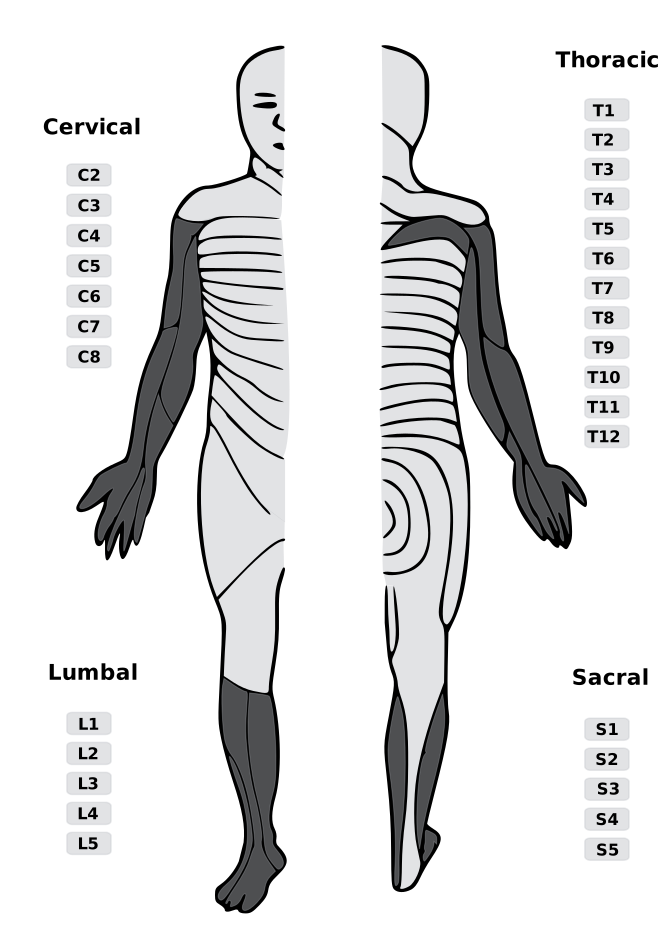
Thoracic · Chest and abdominal wall pattern aid
Thoracic level → band-like pattern.
Thoracic radiculopathy is usually a sensory-predominant syndrome: burning, shooting, or band-like pain wrapping from the back toward the chest or abdomen. Routine limb reflexes are usually less useful than the sensory stripe and myelopathy screen.
Selected thoracic level
T8–T9
Pattern root
T8
thoracic band
Dermatome / band
Motor / trunk wall
Reflex
Mimic / caution
Dermatomal map
T8 highlighted
Thoracic band landmarks
| Disc level | Root pattern | Dermatome landmark | Motor / reflex expectation | Key caution |
|---|
Thoracic clinical warning
- Thoracic radiculopathy is the least common radiculopathy location, and symptoms often wrap around the front of the body in a dermatomal distribution [Johns Hopkins].
- The most common presenting complaint is band-like chest wall pain; sensory loss may be asymmetric and dermatomal, while motor findings are often limited to intercostal or abdominal wall weakness [PM&R KnowledgeNow].
- Thoracic and abdominal pain can mimic many visceral, rib, zoster, diabetic, infectious, or neoplastic conditions, and diagnosis may be delayed for months or years [Choi et al.].
- Screen carefully for thoracic myelopathy. Bowel or bladder dysfunction, hyperreflexia, profound weakness, gait change, or a clear sensory level should prompt urgent evaluation [PM&R KnowledgeNow].
Thoracic mapping uses common dermatome landmarks and synthesis from PM&R KnowledgeNow, Johns Hopkins Medicine, and StatPearls — Spinal Nerves.