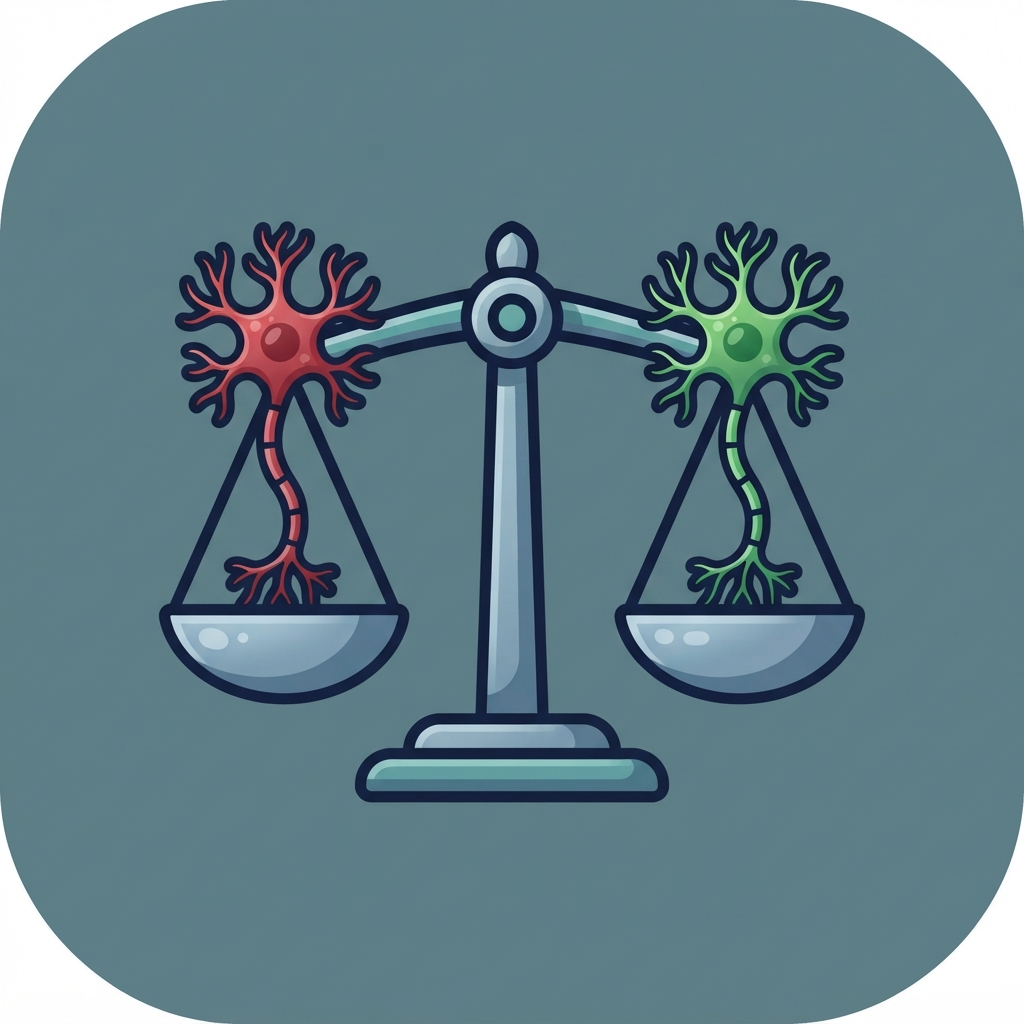
The discs that cushion the bones of your neck can wear down or herniate with age, pressing on a nerve root (causing arm pain, numbness, or weakness) or, less often, on the spinal cord itself. This page explains what is happening, helps you explore which nerve your symptoms fit, and walks through the options — from non-surgical care to ACDF, cervical disc replacement, and posterior foraminotomy.
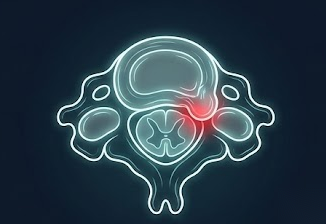
A herniated disc can press on a nerve root

A catch-all term for the age-related wear, bulging, and herniation of the cushioning discs in the neck, which can crowd the nearby nerves or spinal cord.
Between each pair of neck bones sits a cushioning disc that lets the neck move. With age, discs lose height, the outer ring weakens, and bone spurs form. When a bulging disc or spur narrows the opening where a nerve root exits, it irritates that nerve — producing cervical radiculopathy: pain, numbness, tingling, or weakness along a specific path into the shoulder, arm, or hand. The interactive tool below shows which nerve matches which pattern.
Less commonly, a large central herniation or widespread degeneration presses on the spinal cord itself (cervical myelopathy) — a more serious problem whose warning signs deserve prompt evaluation. Most cervical disc problems, though, improve with time and non-surgical care.
The soft disc center pushes through the outer ring and can press on a nerve root as it exits the spine.
Discs lose height and bone spurs form, narrowing the openings the nerves travel through.
A pinched nerve root sends pain, numbness, or weakness down a specific path into the arm and hand.
Pressure on the spinal cord itself is less common but more serious, and is treated differently.
Most neck and arm symptoms are not emergencies. Seek care promptly for worsening hand clumsiness, unsteady walking, leg weakness, or any new loss of bladder or bowel control — these can signal spinal-cord involvement (myelopathy) and should not wait.
Relieving pressure on a nerve is very good at easing arm symptoms and less reliable for neck pain alone. Select a symptom to see what to realistically expect.
Select a symptom to see how treatment typically affects it.
Each neck level maps to a different nerve. Pick a level to see the dermatome, muscles, and reflex that root most often affects — educational, not a diagnosis.
This interactive tool is provided by the Norman Prince Spine Institute. It is a pattern-recognition aid for education and should be correlated with your exam and imaging by a clinician.
Several factors shape whether surgery makes sense and which operation fits. Choose a category, then select a factor to learn more.
Select a factor to see how it affects candidacy and which operation fits.
Most people start with non-surgical care. Surgery is considered when arm symptoms are severe or persistent despite a fair trial, when there is significant weakness, or when the spinal cord is involved.
Most cervical radiculopathy improves within weeks to months. Physical therapy, activity changes, anti-inflammatory or nerve-pain medication, and, in selected cases, an epidural steroid injection can control symptoms while the irritated nerve settles. Surgery is rarely urgent unless there is major weakness or cord involvement.
When surgery is warranted, the goal is to decompress the pinched nerve or cord. This can be done from the front of the neck (removing the disc, then either replacing it or fusing the level) or from the back (opening the nerve's exit without fusion). The right choice depends on your anatomy, the number of levels, alignment, and whether the cord is involved.
Select an operation to see, in one place, how it works step by step and what to expect afterward. At Brown we favor preserving motion when the anatomy suits it, and reserve fusion for situations that call for it.
All five cervical operations, side by side. None is universally better — a mobile, well-aligned neck with a soft herniation and a stiff, collapsed, or cord-compressing level are different problems that favor different solutions. The aim is to match the operation to your anatomy.
| Operation | Approach | Motion | Fusion | Best for | Typical recovery |
|---|---|---|---|---|---|
| Disc ReplacementFront · motion-preserving | Front of the neck | Preserved at the level | No | Soft herniation, good bone, well-aligned, 1–2 levels | Outpatient or 1 night; quick return, nothing to fuse |
| ACDFFront · fusion | Front of the neck | Fused — level made solid | Yes (spacer & plate) | Arthritic, collapsed, unstable, or multi-level disease | Outpatient or 1 night; activity guidance while bone heals |
| ForaminotomyBack · motion-preserving | Back of the neck | Preserved — disc left intact | No | Nerve pinched off to one side by a spur or lateral disc | Usually outpatient; no hardware, minimal limits |
| CorpectomyFront · fusion | Front of the neck | Fused — column rebuilt | Yes (strut/cage & plate) | Compression behind the vertebral body, or disease spanning levels | 1–3 nights; sometimes a brace while the longer fusion heals |
| LaminectomyBack · decompression | Back of the neck | Preserved alone; fused if stabilization is added | Sometimes (screws & rods) | Multi-level cord compression from behind, with good alignment | 1–3 nights; more early neck soreness; gradual return |
Front-of-neck operations (disc replacement, ACDF, corpectomy) reach the spine through a natural plane and avoid the neck muscles; back-of-neck operations (foraminotomy, laminectomy) avoid the throat entirely. Which fits depends on where the pressure is, how many levels are involved, and your alignment — decided together with your surgeon.
This educational resource was developed by the Division of Spine and Spine Tumor Neurosurgery at Brown University Health to help patients and families understand cervical disc disease and its treatment options. Our surgeons offer the full spectrum of care, from motion-preserving cervical disc replacement to ACDF and posterior approaches, and work closely with physical therapy, pain management, and physiatry so that surgery is recommended only when it is the right next step.


For full faculty profiles, visit the Brown Neurosurgery Spinal Surgery Division.