What Is NPH? The Triad Am I a Candidate? Treatment Request Consultation
Interactive Patient Education

Normal Pressure
Hydrocephalus

Normal pressure hydrocephalus (NPH) is a buildup of fluid in the brain that develops slowly in older adults and is easy to mistake for aging or dementia. It classically causes three things: a change in walking, mild memory and thinking problems, and loss of bladder control. It matters because, unlike most causes of these symptoms, NPH can sometimes be improved with treatment.
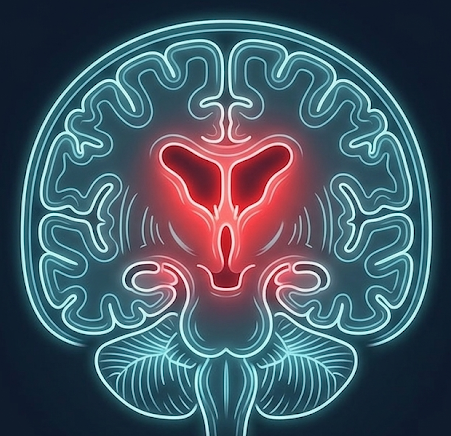
Coronal view of the brain with enlarged, fluid-filled ventricles, as seen in normal pressure hydrocephalus
In NPH the ventricles enlarge while the pressure stays close to normal.

What Is Normal Pressure Hydrocephalus?

A treatable cause of walking, memory, and bladder problems that is often mistaken for ordinary aging.

Deep inside the brain are fluid-filled spaces called ventricles that hold cerebrospinal fluid (CSF). In normal pressure hydrocephalus, this fluid gradually builds up and the ventricles enlarge — but, unlike other forms of hydrocephalus, the pressure inside the head stays close to normal. That is what makes NPH different, and harder to recognize.

Because it comes on slowly in older adults, NPH is frequently mistaken for normal aging, Alzheimer's disease, or Parkinson's disease. The distinction is important: the symptoms of NPH can improve when the extra fluid is drained, which is not true of most other causes of the same symptoms. Recognizing NPH — and testing for it — is the key step.

At Brown Neurosurgery, evaluation focuses on two questions: do the symptoms and imaging fit NPH, and — just as important — is a person likely to benefit from draining fluid? A short, low-risk test (described below) helps answer the second question before any decision about surgery is made.

Key Facts
Who: Usually adults over 60
Classic triad: Walking, thinking, bladder
Pressure: Near normal, despite large ventricles
Often mistaken for: Dementia or Parkinson's
Key test: Large-volume spinal tap trial
Treatment: A shunt to drain the extra fluid
Why the walking problem is the one to watch. In NPH the gait change usually appears first and is the symptom most likely to improve with treatment. An unexplained decline in walking in an older adult is worth mentioning to a doctor even if memory still seems fine.

The Classic Triad

NPH tends to cause three symptoms, sometimes remembered as "wet, wobbly, and wacky." Select one to see what it looks like and how likely it is to respond to treatment.

Select a symptom at left to learn more about it.

Order matters. The three symptoms do not always appear together, and they rarely arrive at once. When the walking change comes first, NPH is more likely and treatment tends to help more. When memory problems dominate from the very start, other conditions become more likely and the benefit of a shunt is less certain.

How NPH Is Diagnosed

Diagnosis has two parts: confirming the picture fits NPH, and testing whether draining fluid actually helps you.

Imaging (MRI or CT)

A scan shows whether the ventricles are enlarged out of proportion to the normal shrinkage of the brain that happens with age. It also helps rule out other causes such as a stroke, tumor, or a different kind of hydrocephalus.

A close look at your walking

Your team may film or time your walking and turning before and after fluid is removed, because a measurable improvement in gait is one of the most useful signs that a shunt will help.

The spinal tap trial

In a large-volume spinal tap (also called a tap test), a modest amount of CSF is removed through a needle in the lower back — the same idea as a routine lumbar puncture. If your walking or thinking improves over the next hours to days, that suggests a shunt is likely to help.

Extended drainage (if needed)

When a single tap is not clear-cut, a few days of continuous CSF drainage through a small temporary lumbar catheter, in the hospital, gives a longer look at whether symptoms respond. Tell your team if you take blood thinners before any of these tests.

Why we test before we treat. Not everyone with large ventricles has NPH, and not everyone with NPH improves after a shunt. The tap or drainage trial is a low-risk way to predict who is most likely to benefit, so the decision about surgery is based on your own response — not on the scan alone.

Am I a Candidate for a Shunt?

Several factors make a good response to treatment more or less likely. Select one to learn how it weighs in. This is a guide to the conversation, not a substitute for evaluation.

Select a factor at left to see how it affects candidacy.

Treating NPH With a Shunt

NPH is treated by placing a shunt — a soft tube with a valve, entirely under the skin — that drains the extra CSF from a ventricle to the abdomen, where it is absorbed. Select each step to see what happens and why.

Why a programmable valve matters in NPH. Older adults are more prone to overdrainage — removing too much fluid, which can cause a collection of blood on the surface of the brain (a subdural hematoma). A programmable valve lets your surgeon fine-tune the drainage in the office, without surgery, to get the benefit while lowering that risk. Strong magnets, including MRI scanners, can change some programmable valve settings, so your team should confirm the setting after any MRI.

What Outcomes Can Patients Expect?

In well-selected patients a shunt can restore meaningful function — but the benefit varies from person to person, and it is important to have realistic expectations.

Walking often improves most

Gait is the symptom that responds best and most reliably, especially in people whose walking improved after the tap or drainage trial. Many notice steadier, less "stuck" walking.

Thinking and bladder: more variable

Memory, attention, and bladder control can improve too, but less predictably than gait. A shunt is more likely to stabilize or partly improve thinking than to fully reverse it, particularly if symptoms have been present a long time.

Benefit can change over time

Some people keep their improvement for years; in others the benefit lessens, or another condition of aging adds new symptoms. Ongoing follow-up and valve adjustments help maintain the best result.

Risks to weigh

As with any shunt: overdrainage (and subdural collections), infection, blockage, and the need for revision. Risks are taken seriously in older adults, which is one reason programmable valves and careful follow-up are used.

Shared decision-making. Whether to proceed with a shunt is a decision you make together with your team, weighing your tap-test response, your overall health, and what matters most to you. The goal is honest expectations: a shunt is not a cure for aging, but for the right person it can give back independence — especially in walking.

Frequently Asked Questions

Is NPH the same as dementia?
No. NPH can cause memory and thinking problems that resemble dementia, which is why it is sometimes mistaken for Alzheimer's disease. But NPH comes from fluid buildup in the brain, and unlike most dementias, its symptoms can improve when that fluid is drained. That is exactly why it is worth identifying.
Will a shunt cure my memory or restore everything?
Not necessarily. Walking tends to respond best. Memory and bladder symptoms can improve, but less predictably, and a shunt is more likely to help or stabilize them than to fully reverse them, especially after long-standing symptoms. Your tap-test response is the best guide to what to expect for you.
What is the spinal tap trial like?
It is similar to a routine lumbar puncture: with local numbing, a thin needle removes some spinal fluid through the lower back. Your walking (and sometimes thinking) is checked before and over the hours to days afterward to see if it improves. If a single tap is not clear, a few days of continuous drainage in the hospital can give a better answer.
If I improve after the tap, does that guarantee the shunt will work?
It is a strong, encouraging sign and the best predictor we have, but not a guarantee. Some people who improve after the tap get an excellent, lasting result from a shunt; a smaller number improve less than hoped. Your team will discuss how confident the testing makes them in your specific case.
Why do I need a programmable valve?
A programmable valve lets your surgeon adjust how much fluid drains without another operation, using a device held against the skin. In older adults this is valuable because it helps avoid overdrainage — removing too much fluid, which can cause a subdural collection of blood — while still relieving symptoms. Tell any MRI staff you have a programmable shunt, since the magnet can change the setting.
Is it worth being evaluated if I am elderly?
Age alone does not rule out treatment. What matters most is the pattern of symptoms (especially gait), the imaging, your response to the tap or drainage trial, and your overall health. A careful evaluation is the way to find out whether treatment is likely to help you specifically.

Meet the Team

CSF disorders such as NPH are evaluated and treated through Brown Neurosurgery, with careful shunt selection and long-term follow-up.

See the full neurosurgery team and request an evaluation on the Brown Neurosurgery website.

What Is NPH? The Triad How It's Diagnosed Am I a Candidate? Treatment Outcomes FAQ